
Da Nang
The Stone Carving Village Below the Marble Mountains
Non Nuoc has carved stone at the foot of the Marble Mountains for generations. It costs nothing to look, the stone no longer comes from the hills above, and the only real risk is a showroom stop you did not ask for.
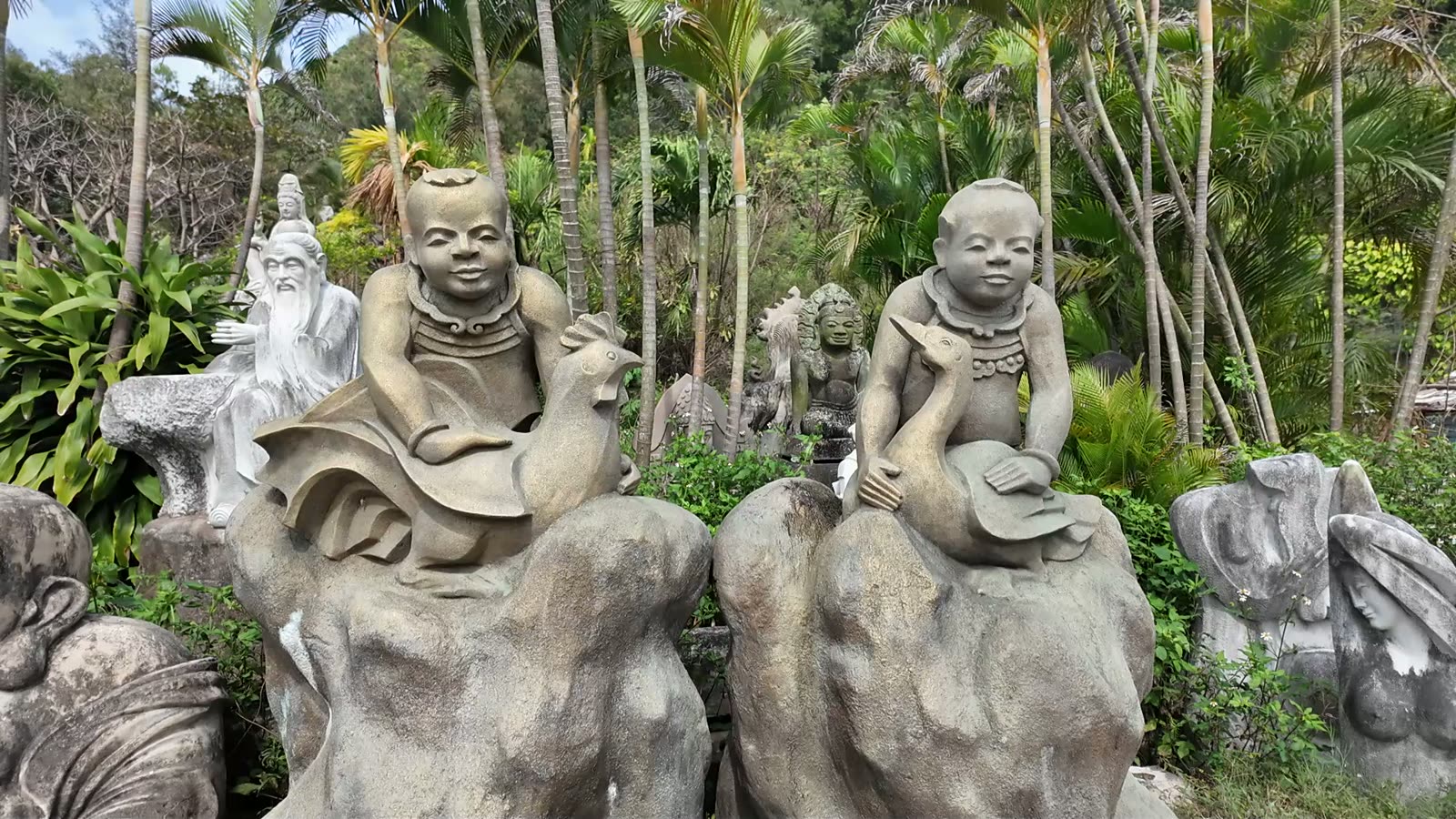
Drive south from Da Nang towards Hoi An and, just before the road reaches the Marble Mountains, the verges fill up with stone. Lions, Buddhas, dragons, Madonnas, horses, life-size and larger, standing in rows in the open air with no fence and nobody guarding them. This is Non Nuoc, the stone-carving village at the foot of the hills, and most visitors see it only through a car window.
It deserves a little more than that, and a little less than some tours give it. Here is what the village actually is, what it costs to look (nothing), and how to look without being steered into buying.
What the village is
Non Nuoc is a craft village rather than a sight. There is no gate, no single building to visit and no route to follow. It is a stretch of road and the lanes behind it, lined with family workshops, showroom yards and shops, all working in stone.
The craft is old here, though how old depends on who you read. Da Nang’s official tourism portal says the village was founded around the 17th century by a craftsman from Thanh Hoa named Huynh Ba Quat. A 2014 report in Tuoi Tre, one of Vietnam’s main newspapers, credits the same man but places it in the late 18th century. We are not going to pick between them. What both agree on is that this is a working trade that has passed down through families for generations, and in 2014 Vietnam’s Ministry of Culture added the craft to the national list of intangible cultural heritage.
What you see from the road is mostly the finished end of the trade: large figures for temples, gardens and graves, and smaller pieces for visitors. What is more interesting is the work itself, if you can find someone doing it.
The facts we could source
Non Nuoc stone-carving village
| Entry to the village | Free |
| Listed as national intangible cultural heritage | 2014 |
| Quarrying in the Marble Mountains prohibited | by a 1990 decision |
| Stone Carving Memory Museum opened | 24 April 2023 |
Sources: Da Nang city tourism portal, 2026 admission list (dated 22 January 2026, lists the village under free destinations); the portal’s page on the village (heritage listing, 1990 quarrying ban); the portal’s page on the museum (opening date). All checked 12 November 2026. The hill itself, Thuy Son, has its own ticket, covered in our Marble Mountains guide.
Things you will find quoted elsewhere that we have left out: the number of workshops (the figures we found are more than ten years old), the number of workers, opening hours for individual shops, and any prices for carvings or shipping. We do not print numbers we cannot stand behind. Shops set their own hours, and a carving’s price is whatever you and the shop agree.
Where the stone comes from now
The village grew up here because the hills above it were made of marble. That is no longer where the stone comes from. According to the city tourism portal, the provincial authorities issued a decision in 1990 prohibiting further quarrying in the Marble Mountains, and since then the carvers have had to bring stone in from other regions.
This matters for one practical reason. A piece sold at the foot of the Marble Mountains is not necessarily Marble Mountains marble, and nobody honest will claim it is. That is not a scandal. The skill is local even when the stone is not. But if where the stone came from matters to you, ask the shop, and ask them to write the answer on the receipt.
Buy a piece because you like it and because someone here carved it. Do not buy it because of where you assume the rock came from.
How to look without being sold to
The village is free to walk through, and the yards are open to the road. The difficulty is not getting in. It is the visit that has already been planned for you.
Drivers and some tours are paid a commission to bring visitors into a particular showroom. The showroom is often air-conditioned, the stone is often good, and the staff are often very good at their job. None of that is sinister. But it means the stop is there for the sale, and a five-minute look can become forty minutes. We wrote about this stop, and how to ask about it before you book a car, in Da Nang to Hoi An.
- Ask before you set off whether the day includes a stone workshop, and for how long. A vague answer is an answer.
- Choose the yard yourself. The workshops along the road are next to each other. If you want to watch carving, ask your driver to stop where you can see someone working, not where the showroom is biggest.
- Watch for five minutes. Someone shaping a face out of a block with a chisel and a grinder is the real thing here, and it costs nothing to stand and look.
- A polite no is normal. You are under no obligation to buy, and walking two doors down is completely acceptable.
Two physical notes. The yards sit beside a busy road, so cross with care and keep to the verge. And carving is dusty, loud work: if you have a sensitive chest, stand back from anyone using a power tool.
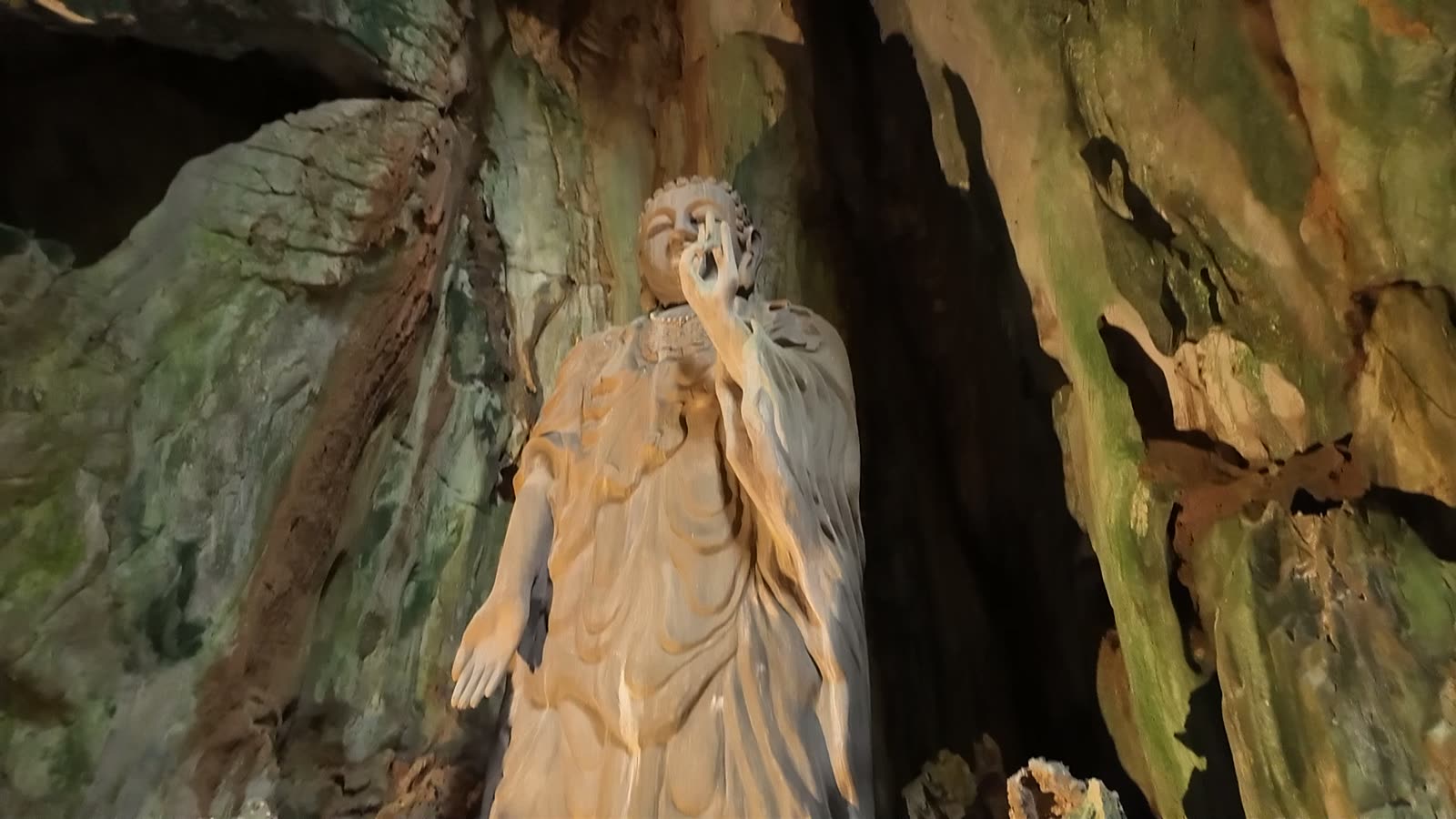
The carving in the caves on Thuy Son, just above the village, is worth seeing first. It puts the shop figures in context: the hills have been shaped by hand for a long time, for worship rather than for sale.
If you do want to buy something
Plenty of people do, and some of the work is excellent. Small pieces go home in a suitcase. Large pieces are where things go wrong, because a stone figure is heavy, fragile and has to cross an ocean.
We are not going to quote you shipping prices or US import charges. They depend on weight, size, carrier and the rules at the time, and any figure we printed would mislead someone. What we will give you is the list of questions to get answered in writing before you pay:
- What is the stone, and where is it from? On the receipt.
- The exact size and weight of the piece, packed.
- What the price includes: carving only, packing, transport to the port, sea or air freight, delivery to your door.
- Who handles US customs on arrival, and who pays any duties, fees or broker charges. If the shop cannot answer, assume it is you, and check the US Customs and Border Protection website (cbp.gov) for what applies to you.
- Insurance and breakage: what happens if it arrives in pieces, and who you contact.
- A delivery estimate, and a name and phone number for the person responsible.
Photograph the piece, the receipt and the person who served you. Pay by card if you can, because a card payment gives you a record. For which notes to carry if you pay cash, see money in Vietnam.
The stone-carving museum
The city opened the Non Nuoc–Ngu Hanh Son Stone Carving Memory Museum on 24 April 2023, according to the tourism portal, which gives its address as R1–R12 Truong Sa Street. It is a museum about the craft rather than a shop, which makes it a useful counterweight to the showrooms.
The portal page does not list opening hours or an entry fee, and we have not visited it ourselves. If it is on your list, ask your hotel or driver to check it is open on the day.
How it fits into the day
Non Nuoc is not a destination on its own. It is a short stop attached to the Marble Mountains, which sit on the road between Da Nang and Hoi An. The natural order:
- Early morning: the Marble Mountains, before the stone heats up. Take the lift, see the caves, walk down. Our Marble Mountains guide has the prices and the stairs.
- Then: fifteen to thirty minutes in the village, watching rather than shopping, unless you came to shop.
- Then on to Hoi An for lunch and a rest, with the old town in the late afternoon.
That is exactly the shape of Day 1 in our three days in Da Nang and Hoi An. If walking is the thing you are weighing up, the village itself is flat; the hill above it is not. Our longer piece on how much walking a Vietnam trip involves covers the difference.
Common questions
Is there an entry fee for Non Nuoc stone village?
No. Da Nang’s city tourism portal lists the Non Nuoc stone-carving village among its free destinations in its 2026 admission list, checked 12 November 2026. The Marble Mountains hill above it has its own ticket.
Where is Non Nuoc stone village?
At the foot of the Marble Mountains, on the road between Da Nang and Hoi An and nearer the Da Nang end. The workshops line the road and the lanes behind it.
Is the stone from the Marble Mountains?
Not any more. The city tourism portal says quarrying in the Marble Mountains was prohibited by a decision in 1990, and the carvers now bring stone in from other regions. Ask what the stone is and where it came from, and have it written on the receipt.
How long do you need at Non Nuoc?
Fifteen to thirty minutes is enough to watch carving and walk past a few yards. Longer than that usually means you are inside a showroom being sold to.
Can you ship a stone carving home to the United States?
Many shops offer it. Before paying, get in writing what the price includes, the packed weight, who handles US customs and pays any duties, and what happens if the piece arrives broken. We do not print shipping prices because they vary too much to be useful.
Do I have to buy something if my driver takes me to a workshop?
No. Drivers are sometimes paid a commission to bring visitors to a particular showroom, but a polite no is entirely normal, and you can ask before you set off whether the day includes a workshop stop.
Planning this trip yourself?
Ask us anything about the route, the pace or the timing. It goes straight to the office in Da Nang, not to a call centre — and if we are not the right company for your trip, we will tell you that too.



Mai Tiến Tần
Founder, Vietking Travel · Licensed international tour operator No. 01-1082/2018 · Company registered in Vietnam, 2011
Everything here is written from Da Nang, after walking the route. Prices carry the date they were checked. Where we do not have a figure we can stand behind, we say so rather than guess.