
Practical
Tourist Scams in Da Nang and Hoi An and How to Avoid Them
Most visitors never meet a scam. The few that news outlets and the authorities have documented are specific and avoidable, and this page covers only those.

Short answer: Da Nang and Hoi An are not dangerous, and most visitors never meet a scam. The problems that are actually documented by news outlets and the authorities are few and specific: unlicensed or overcharging cars at the airport, a fare that changes after you agree it, fake hotel and tour pages online, and persistent street sellers in Hoi An. Almost all of them are solved by deciding the price before you move and paying only through channels you can verify.
Online lists of “Vietnam scams” are long. We left out everything we could not trace to a news report, a police statement or an official body. This page is meant to be useful, not frightening.
What is documented, at a glance
Reported cases and official warnings, read 28 October 2026
| Unlicensed driver at Da Nang airport charged a tourist more than 10 times the usual fare (VnExpress, 20 Feb 2023) | Fined 11 million₫ |
| Da Nang announces a crackdown on airport taxi scams (VnExpress, 22 Mar 2023) | Task team |
| Driver asked for 2.5 times an agreed fare (VnExpress, 22 Nov 2023) | Fined 1.5 million₫ |
| Da Nang police warn of fake hotel fanpages (VietnamNet, 5 May 2025) | Advisory |
| National tourism authority warns of fake booking pages (Viet Nam News, 17 Feb 2025) | Directive |
| Foreign visitors complain of hawkers in Hoi An (VnExpress, 13 Mar 2025) | Complaints |
Sources are linked in each section below. The cases are reports from news outlets and officials, not a statistical measure of how common they are. Fines are as reported at the time.
The airport car that is not a taxi
What was reported. VnExpress International reported on 20 February 2023 that on 27 December 2022 a man who was not a licensed taxi driver approached a South Korean visitor at Da Nang airport, took her phone, and cancelled the ride she had already booked on Grab. He then charged her ₩120,000 (about US$93) for a 4.5 km trip, more than ten times the usual fare. He was fined 11 million dong for carrying passengers without a licence and his driving licence was temporarily revoked. The Department of Tourism’s customer feedback division returned about 2.11 million dong to her. In March 2023 VnExpress reported that Da Nang would set up a special team for unlicensed airport taxi drivers.
How to avoid it.
- Arrange the first transfer before you fly, by app or through your hotel or tour operator. Arriving after a long flight is the worst moment to negotiate.
- Keep your phone in your own hand. Do not hand it to anyone offering “help” with your booking.
- Ignore anyone who approaches you inside the terminal. Walk to the designated ride-hailing area or the official taxi rank.
- Look at the live in-app price before you speak to anybody offering a car; it becomes your reference. Our guide to getting from Da Nang to Hoi An covers every option.
The fare that changes
What was reported. VnExpress reported on 22 November 2023 that a Thai visitor had agreed a fare of 1.5 million dong for a trip from a Da Nang hotel to Linh Ung Pagoda (on the Son Tra Peninsula), Ba Na Hills and Hoi An, and that the driver later asked for 3.8 million, about 2.5 times the agreed price. After she complained on social media, inspectors confirmed her account, fined the driver 1.5 million dong and suspended his licence for two months. The March 2023 story also described a South Korean visitor charged 378,000 dong for a Grab car from Da Nang to Hoi An who was then asked for another 350,000 dong as a “parking fee.”
How to avoid it.
- Agree the total, and what it includes, before the car moves: waiting time, tolls, parking, number of stops. Have it in writing, or a screenshot of the app.
- Photograph the car and its plate at the start of a long private trip. The Thai visitor’s booking details and a photo of the car are what made the case easy to confirm.
- Pay in dong, and count the notes. The 20,000 and 500,000 notes look alike; see the money guide before you pay a driver at night.
Fake hotel and tour pages
This is the one with the biggest sums attached, and it happens before you arrive.
On 5 May 2025 VietnamNet reported a warning from Da Nang City Police: fake fanpages copy the names, logos and photos of real four- and five-star hotels, run paid ads for implausibly cheap rooms, ask for a deposit of 30-50%, then delete the page. The police advice, in summary: check the page’s creation date, followers and reviews; confirm details through the hotel’s own website or the phone number on Google Maps; never send a deposit to a personal bank account; treat deals that look too good as a red flag; and use “Page Transparency” to see who runs a page.
The Viet Nam National Authority of Tourism issued a similar directive in February 2025, reported by Viet Nam News, after a visitor lost more than a billion dong to a fake Facebook page posing as a Ninh Binh resort. It says to book only through the official websites and fan pages of licensed businesses, and notes that fake pages can even carry a verified badge. That case was in Ninh Binh, not Da Nang, but the method is the same.
- Book through the hotel’s own website or a major booking platform, not through a chat message.
- Check any operator’s licence. We publish ours, No. 01-1082/2018, and explain how to check it on our About page. Any company can say it is licensed; ask for the number and look it up.
- The same applies to visas. Fake e-visa sites are documented by the Immigration Department; see the e-visa guide.
Sellers in Hoi An
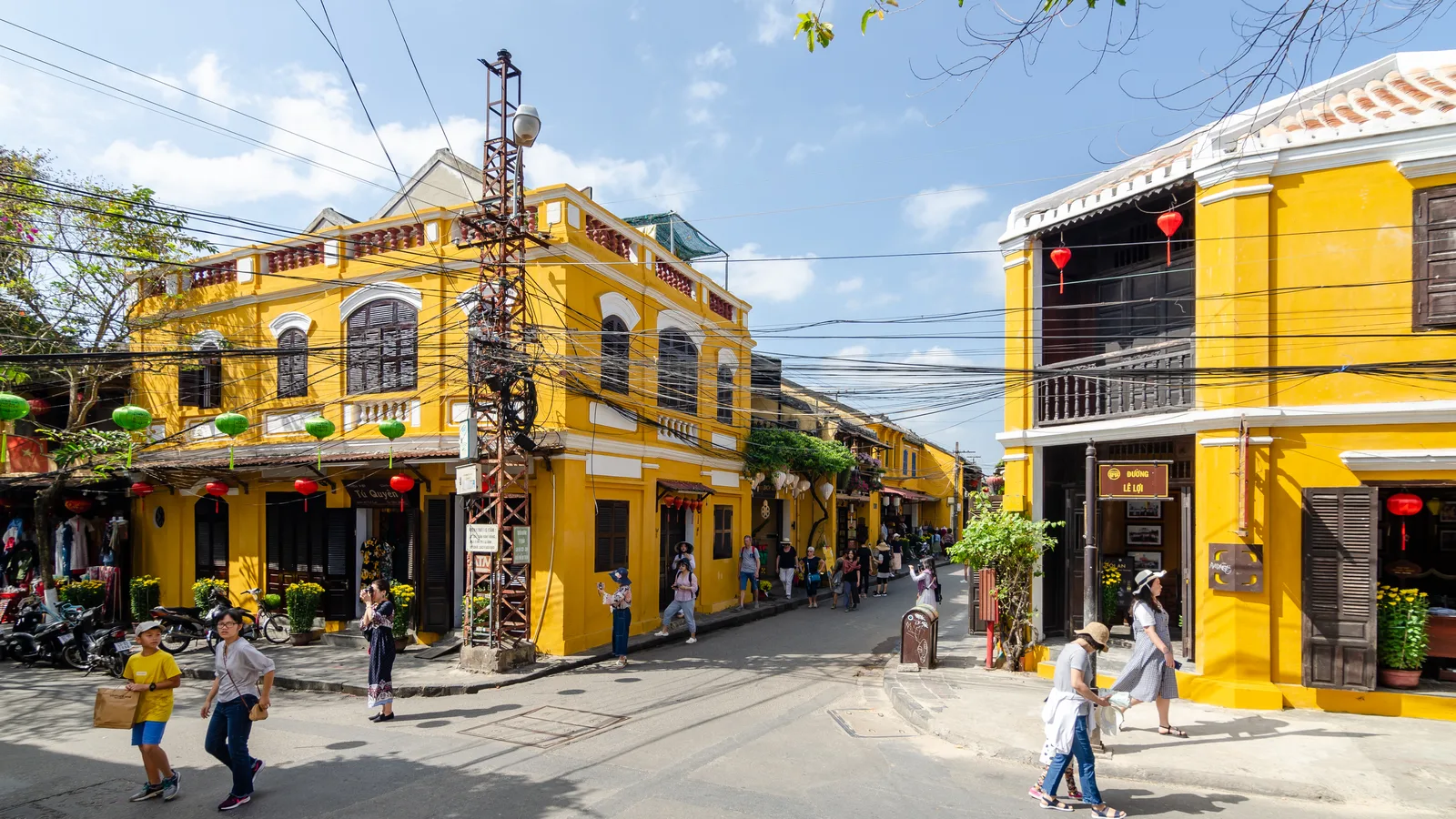
On 13 March 2025 VnExpress International reported complaints from foreign visitors about overcrowding and street sellers in Hoi An. One tourist described a seller pushing an item into his son’s hand and then asking for money, so he had to keep his hand in his pocket. The city chairman told the paper that street vendors “have long been part of Hoi An’s culture,” that there is no rule against selling to tourists, and that the city plans a dedicated commercial area to manage vendors.
This is persistence, not fraud. Three habits help:
- Do not take anything handed to you. A friendly “no, thank you” with a smile, and keep walking.
- Ask the price before you touch. If you want something, compare with another seller. A Belgian visitor quoted by Tuoi Tre News in May 2024 said the same: go to another seller if the price seems too much.
- Buy tickets only at official booths. Our guide to the old town ticket explains where. For the evening, see Hoi An at night, where the river boats and floating candles are the usual place visitors agree a price.
What we are not claiming
Blogs and tour-company pages list many more “scams” in Da Nang and Hoi An: rigged meters, taxi drivers who say a site is closed, tailor deposit disputes, and others. We could not trace those to a news report, a police statement or a tourism authority, so we leave them out. That does not prove they never happen; it means we will not present them as fact. A Tuoi Tre News piece of May 2024 also interviewed visitors who felt fairly treated. Overpaying for a coffee is not a scam, and a quick comparison with a second seller will tell you what is normal. For a list of real prices, see the dated price table in our basket boat guide.
If something goes wrong
- Stay calm and keep your evidence: the booking screenshot, the car and plate photo, the receipt.
- Avoid arguing on a dark roadside. Ask to continue to your hotel, where the front desk can help mediate, and take a photo of any bill or note you are shown.
- Report it. In the 2022 airport case, the visitor complained to the Da Nang Department of Tourism’s customer feedback division and received part of her money back. The US Embassy lists 113 as the police number in Vietnam.
- If you paid a fraudulent deposit, call your bank at once.
See the rest of our Vietnam travel guides. Our note on gratuities is in tipping in Vietnam.
Sources used on this page:
- VnExpress International, 20 February 2023
- VnExpress International, 22 March 2023
- VnExpress International, 22 November 2023
- VietnamNet, 5 May 2025: Da Nang City Police warning
- Viet Nam News, 17 February 2025: national tourism authority
- VnExpress International, 13 March 2025
Common questions
Is Da Nang or Hoi An safe for tourists?
Visitors there generally report no serious problems, and the documented issues are mainly overcharging and online booking fraud rather than violent crime. The US Embassy page in Vietnam currently shows a Level 1 travel advisory, which means exercise normal precautions. Use the same common sense you would anywhere.
What is the most common tourist scam in Da Nang?
The best-documented case is overcharging by unlicensed or unscrupulous drivers, especially at the airport. In 2023 Da Nang announced a crackdown after reports in the news. Ride-hailing apps that show the price in advance, or a pre-booked transfer, avoid most of the risk.
How do I avoid fake hotel and tour booking pages?
Da Nang police advise checking when a page was created, its followers and reviews, confirming details on the hotel’s own website or Google Maps number, and never paying a deposit to a personal bank account. The national tourism authority says to book only through official sites and licensed businesses.
Should I agree a taxi price in advance in Da Nang?
Yes, for any private car. Agree the total and what it includes, such as waiting time and parking, and keep it in writing or as a screenshot. A reported 2023 case involved an agreed fare that later rose to about 2.5 times.
Who do I report a problem to?
Keep your evidence and report it to the police, or to the Da Nang Department of Tourism’s customer feedback division, which handled a documented airport case in 2022-2023. The US Embassy page lists 113 as the police emergency number.
Planning this trip yourself?
Ask us anything about the route, the pace or the timing. It goes straight to the office in Da Nang, not to a call centre — and if we are not the right company for your trip, we will tell you that too.



Mai Tiến Tần
Founder, Vietking Travel · Licensed international tour operator No. 01-1082/2018 · Company registered in Vietnam, 2011
Everything here is written from Da Nang, after walking the route. Prices carry the date they were checked. Where we do not have a figure we can stand behind, we say so rather than guess.