
Planning
Vietnam Health and Travel Insurance for Travellers Over 50
We are not doctors, so this page does one job: it shows what the CDC, Medicare and the US Embassy publish about Vietnam, with dates, so you know which questions to take to your own doctor and insurer.
Short answer: start talking to your own doctor or a travel-health clinic at least one month before you fly, which is the timing the US Centers for Disease Control and Prevention (CDC) gives for Vietnam. Then check whether your health insurance actually works abroad. For most Americans over 65, Medicare does not, and a medical evacuation can cost tens of thousands of dollars.
This page collects what the CDC, Medicare and the US Embassy publish, with dates, so you know what to ask. It is not medical or insurance advice. Talk to your own physician before you travel, and read your own policy wording. All sources below were read on 28 October 2026.
Start with your own doctor
The CDC’s page for Vietnam travellers says to review its list of recommended vaccines and medicines and see your doctor at least one month before the trip. That matters more after fifty, because the sensible plan depends on your own history: existing conditions, regular medicines, past vaccinations. A website cannot know any of that.
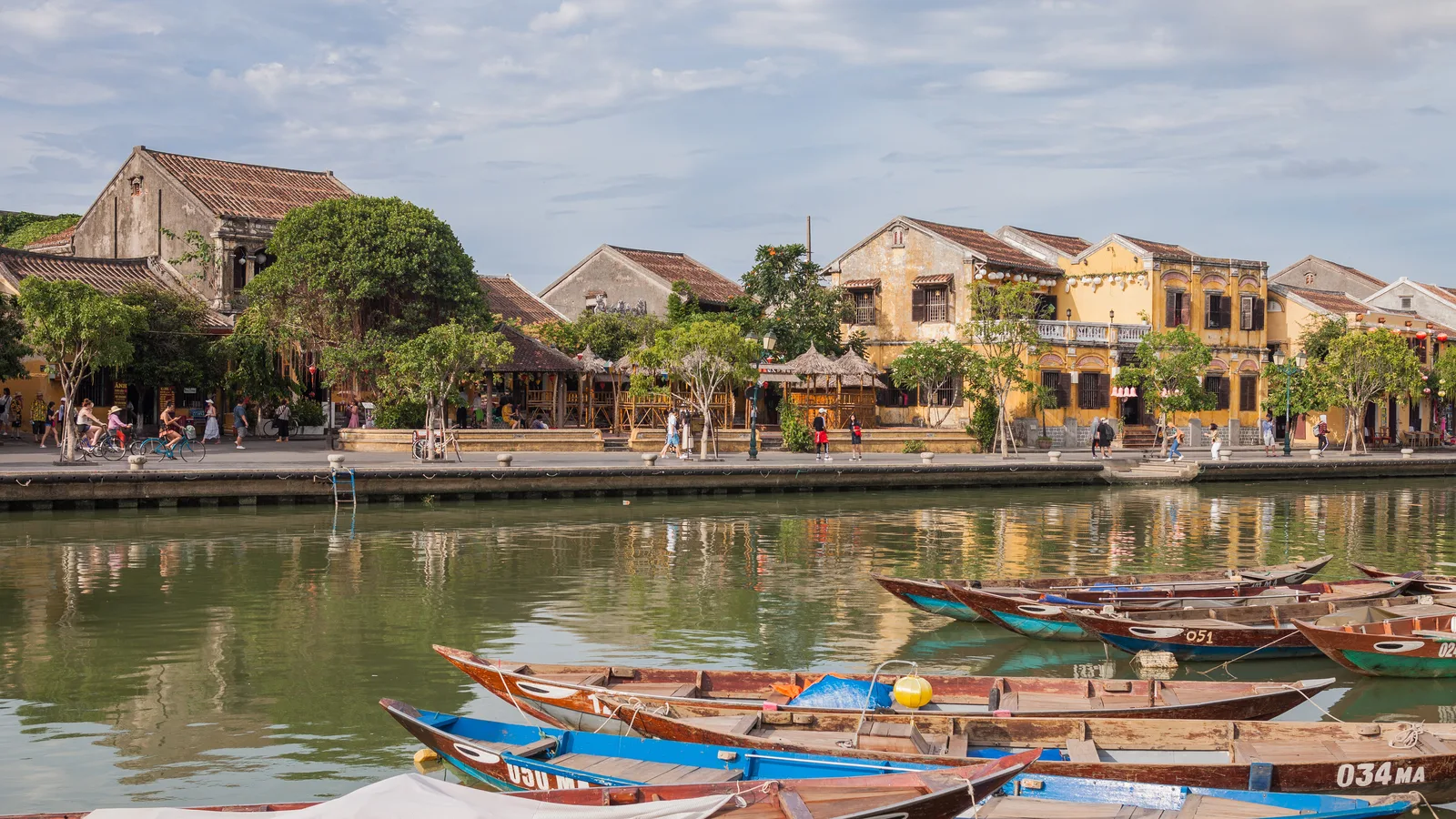
Take your itinerary to the appointment and say you will be in Da Nang and Hoi An (a city and a coastal town, with day trips) rather than trekking in remote areas. It changes the answer.
What the CDC lists for Vietnam
Here is a plain summary of what the CDC Travelers’ Health page for Vietnam said when we read it. It is a conversation starter, not a prescription.
CDC Travelers’ Health: Vietnam, read 28 October 2026
| Routine vaccines (flu, MMR, Tdap, shingles, COVID-19 and others) | Be up to date |
| Hepatitis A | Recommended if unvaccinated |
| Hepatitis B | Recommended if unvaccinated |
| Typhoid | Recommended for most travellers |
| Japanese encephalitis | Not for short urban trips |
| Rabies | Ask about pre-exposure |
| Yellow fever | Not required for entry |
| Malaria | No transmission in Da Nang |
Source: CDC Travelers’ Health, “Vietnam” destination page (wwwnc.cdc.gov/travel/destinations/traveler/none/vietnam), read 28 October 2026. The page also carries a Level 1 Global Dengue notice updated 3 September 2026. It says malaria is limited to rural areas and that cities including Da Nang have no transmission. The page changes; read the current version with your doctor.
Two things to notice. First, the CDC says Japanese encephalitis vaccination is generally for longer stays or higher-risk rural activities and is not recommended for short urban trips, so a Da Nang and Hoi An holiday is usually a conversation rather than a given. Second, the same page says rabid dogs are sometimes found in Vietnam, and that it is worth asking a provider about pre-exposure rabies vaccination. Keep your distance from street animals.
Mosquitoes, food and water
The CDC lists dengue as a year-round risk and groups it with diseases that have no vaccine on its Vietnam page. Its advice is to prevent bites: cover skin, use a repellent with at least 20% DEET or another registered ingredient such as picaridin, and stay in air-conditioned or screened rooms.
On food and water, the CDC’s Yellow Book says to use only beverages that are sealed, treated with chlorine, boiled or otherwise known to be purified. It also says the old “boil it, cook it, peel it” rule helps but never removes the risk, and that carrying hand sanitiser with at least 60% alcohol makes it easier to clean your hands before eating. For rehydration after a stomach upset it recommends oral rehydration solution for severe fluid loss.
We would rather not hand out a list of forbidden foods. The best street food in Hoi An is the reason to come, and our guide to what to eat in Hoi An covers the dishes. Eat where the food is cooked in front of you and served hot, and let your doctor’s advice set the limits.
Heat and pace
Central Vietnam is hot and humid for much of the year (see the best time to visit for the measured data). The CDC’s heat page lists people 65 and older among those who may need extra care on hot days, and warns that many medicines can make you dehydrated or overheated, so never stop or change a medicine without your doctor. Its prevention steps are ordinary: rest in the shade, drink throughout the day, and plan active time for the cooler hours.
That is how we plan days anyway, including day trips such as My Son. Put stairs and walking in the morning, keep midday for lunch and air conditioning, and go back out when the light softens. See how much walking there really is, and use the lift at the Marble Mountains if the stairs are a worry.
Your medicines and pharmacies
- Bring everything you take regularly, in the original containers. The CDC’s counterfeit-medicines page says exactly this.
- Carry it in your hand luggage, with a spare few days’ supply, so a delayed suitcase does not leave you without. That one is our own advice rather than the CDC’s.
- If you must buy locally, the CDC says to buy only from licensed pharmacies, ask for a receipt, never buy from open markets, and check with the pharmacist that the product has the same ingredients as yours.
- Do not plan on buying a regular medicine on arrival. Ask your doctor about this, not us.
Travel insurance: the questions to ask
We are not going to recommend a company or a policy, and you should be wary of any website that does so without knowing your health. We can tell you what the official sources say to check.
- Does my normal health plan cover me in Vietnam? Medicare’s own page says it “usually doesn’t cover health care while you’re traveling outside the U.S.”, with a few narrow exceptions, and that you generally pay all the costs yourself. Medigap policies may cover emergency care abroad, depending on the plan. Call your plan and ask in writing.
- Does the policy cover medical evacuation? The CDC Yellow Book gives costs ranging from US$25,000 within North America to over US$250,000 from distant locations, and says the decision to evacuate rests with the insurance company, not with you.
- What does it say about pre-existing conditions? The Yellow Book warns that conditions needing hospitalisation or medical intervention in the 90 days before departure are often excluded. Ask whether flare-ups of a known condition are covered.
- Does it cover what I will actually do? Ask about the activities on your plan: boats, bicycle rides, steep stairs.
- Do I have to pay first? The Yellow Book says to expect paying up front, which is hard if the bill is large. Check how a claim works and keep your card limits in mind.
The Yellow Book says to start researching specialised policies early, because cover for existing conditions gets harder to arrange with age.
If you need care in Da Nang or Hoi An
The US Embassy keeps a list of medical facilities in Vietnam, including several in Da Nang City and one in Hoi An. It adds a disclaimer: the list is neither exclusive nor exhaustive, the Embassy takes no responsibility for the ability or reputation of the facilities, and medical care in Vietnam generally falls below US standards, so even routine conditions may sometimes need evacuation to a regional medical centre. The Embassy page also gives emergency numbers: 113 for police, 114 for fire, 115 for ambulance.
We will not rank hospitals or print price lists, because medical information that goes out of date can hurt people. Save the Embassy’s list on your phone, keep your insurer’s 24-hour number with your passport, and tell your hotel or tour operator at once if you feel unwell.
Before you pack, also read how to get your visa sorted in the e-visa guide, and plan what to bring with what to pack for central Vietnam. For the full set, see the Vietnam travel guides.
Official sources used on this page:
- CDC Travelers’ Health: Vietnam
- CDC Yellow Book 2026: travel insurance and medical evacuation (page dated 23 April 2025)
- Medicare.gov: travel outside the U.S.
- US Embassy & Consulate in Vietnam: medical assistance (last modified 31 July 2026)
Common questions
What vaccines do I need for Vietnam?
That is a question for your doctor. The CDC lists up-to-date routine vaccines, plus hepatitis A, hepatitis B and typhoid for most travellers, and says yellow fever is not required for entry. It also lists Japanese encephalitis and rabies as things to discuss, depending on your plans. The CDC says to see a doctor at least one month before the trip.
Do I need malaria tablets for Da Nang and Hoi An?
The CDC’s Vietnam page says malaria transmission is limited to rural areas and that cities including Da Nang have no transmission. Whether you need any medicine depends on exactly where you go, so ask your doctor with your full itinerary in hand.
Does Medicare cover me in Vietnam?
Medicare.gov says Medicare usually does not cover health care outside the United States, with a few rare exceptions, and that you generally pay all costs yourself. Some Medigap policies may cover emergency care abroad. Ask your plan directly before you buy travel insurance.
Is medical evacuation insurance worth it?
That depends on you, but the CDC Yellow Book says evacuation can cost from US$25,000 to over US$250,000 and that Medicare does not cover it. Check whether your policy includes it, and remember the insurer decides whether an evacuation takes place.
Is the tap water safe to drink in Vietnam?
The CDC advises using only beverages that are sealed, treated with chlorine, boiled or otherwise known to be purified. Stick to sealed bottled water or water you know has been purified, and ask your hotel what it provides.
Can I buy my prescription medicine in Vietnam?
The CDC’s advice is to bring your own medicines in their original containers rather than buy abroad. If you must buy locally, use a licensed pharmacy, ask for a receipt, never buy at an open market, and check with the pharmacist that the ingredients match yours.
Planning this trip yourself?
Ask us anything about the route, the pace or the timing. It goes straight to the office in Da Nang, not to a call centre — and if we are not the right company for your trip, we will tell you that too.



Mai Tiến Tần
Founder, Vietking Travel · Licensed international tour operator No. 01-1082/2018 · Company registered in Vietnam, 2011
Everything here is written from Da Nang, after walking the route. Prices carry the date they were checked. Where we do not have a figure we can stand behind, we say so rather than guess.