
Hoi An
What to Eat in Hoi An: Cao Lau, Banh Mi, White Rose, Com Ga
Four dishes you will struggle to find done properly anywhere else, how to order them, and how to eat carefully if your stomach is not what it was at thirty.
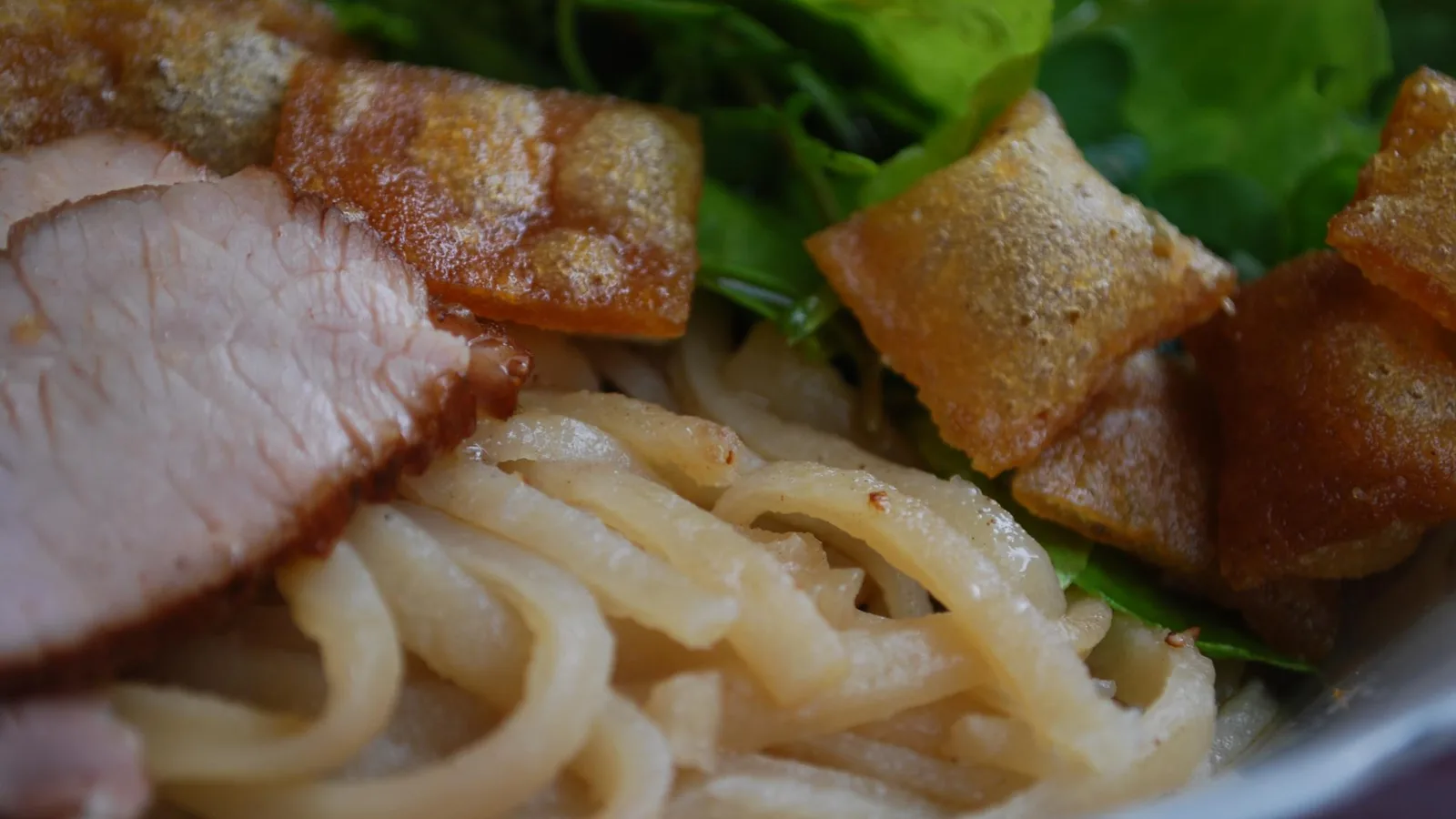
Hoi An has four signature dishes that you will struggle to find done properly anywhere else: cao lau (chewy noodles with roast pork), banh mi (the filled baguette), white rose dumplings (shrimp in translucent rice-flour wrappers) and com ga (turmeric rice with shredded chicken). All four are cheap, all four are ordered in a moment, and none of them needs a booking.
Try one of each over two or three meals, ask what is in a dish before you order it, and read the food-safety notes below before you eat from a street stall. We are a tour operator, not doctors, so talk to your own physician before you travel.
The four dishes in a line
| Cao lau | noodles · roast pork |
| Banh mi | baguette · pate · salad |
| White rose dumplings | rice flour · shrimp |
| Com ga | turmeric rice · chicken |
Sources: Vietnam National Authority of Tourism (vietnam.travel), “4 Must-Try Dishes in Hoi An”, and Wikipedia entries on cao lau and banh bao banh vac, read 28 October 2026. Ingredients vary by kitchen.
Cao lau
Cao lau is the one dish that belongs to Hoi An. The noodles are rice noodles soaked in lye water, which, according to the national tourism board, gives them a firm, springy texture. They arrive with slices of roast pork, bean sprouts and greens and crisp fried pieces on top, with a thick sauce or a little broth rather than a full soup.
You will hear that the noodles must be made with water from one old well in town and ash from trees on the Cham Islands. Wikipedia calls this legend, not established fact, and so do we. It is a good story and nobody should pay extra for it. What is reasonable to say is that the dish is rarely found outside Hoi An itself, which is reason enough to try it here.
Banh mi
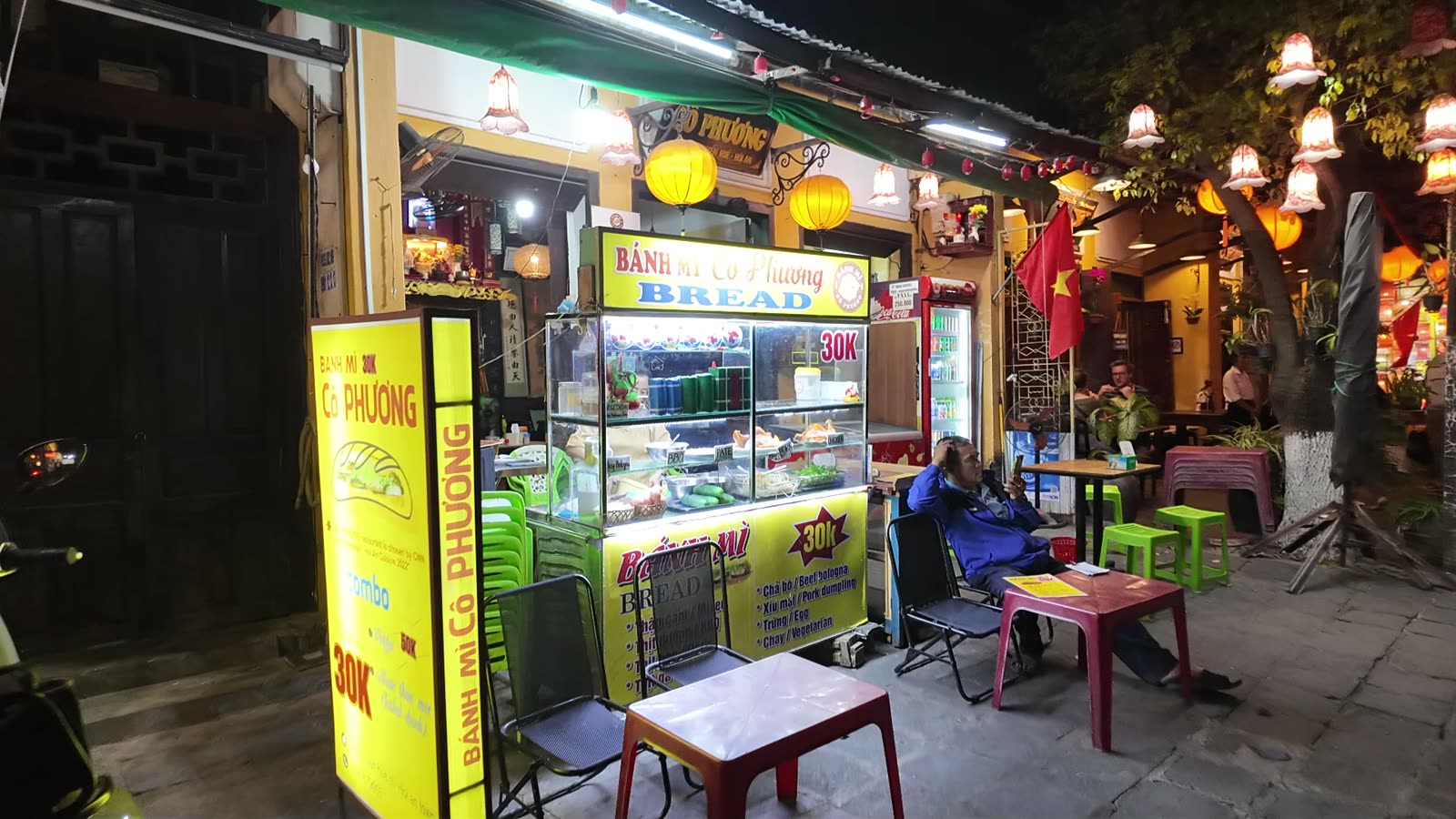
A banh mi is a baguette filled with pate, fresh and pickled vegetables, butter and sweet chilli sauce, plus whatever meat or egg you choose. The tourism board’s list of Hoi An dishes names two shops, and one of them, Banh Mi Phuong, we photographed on a January evening. The shop we filmed offered a mixed filling and a grilled-pork one.
We have said elsewhere that we are not going to publish a restaurant list, and we will not start here. The queue at the famous places moves quickly, and the small places a street or two back are usually better value, which is the advice in Hoi An at night. Pay in small notes: our money guide explains why.
White rose dumplings
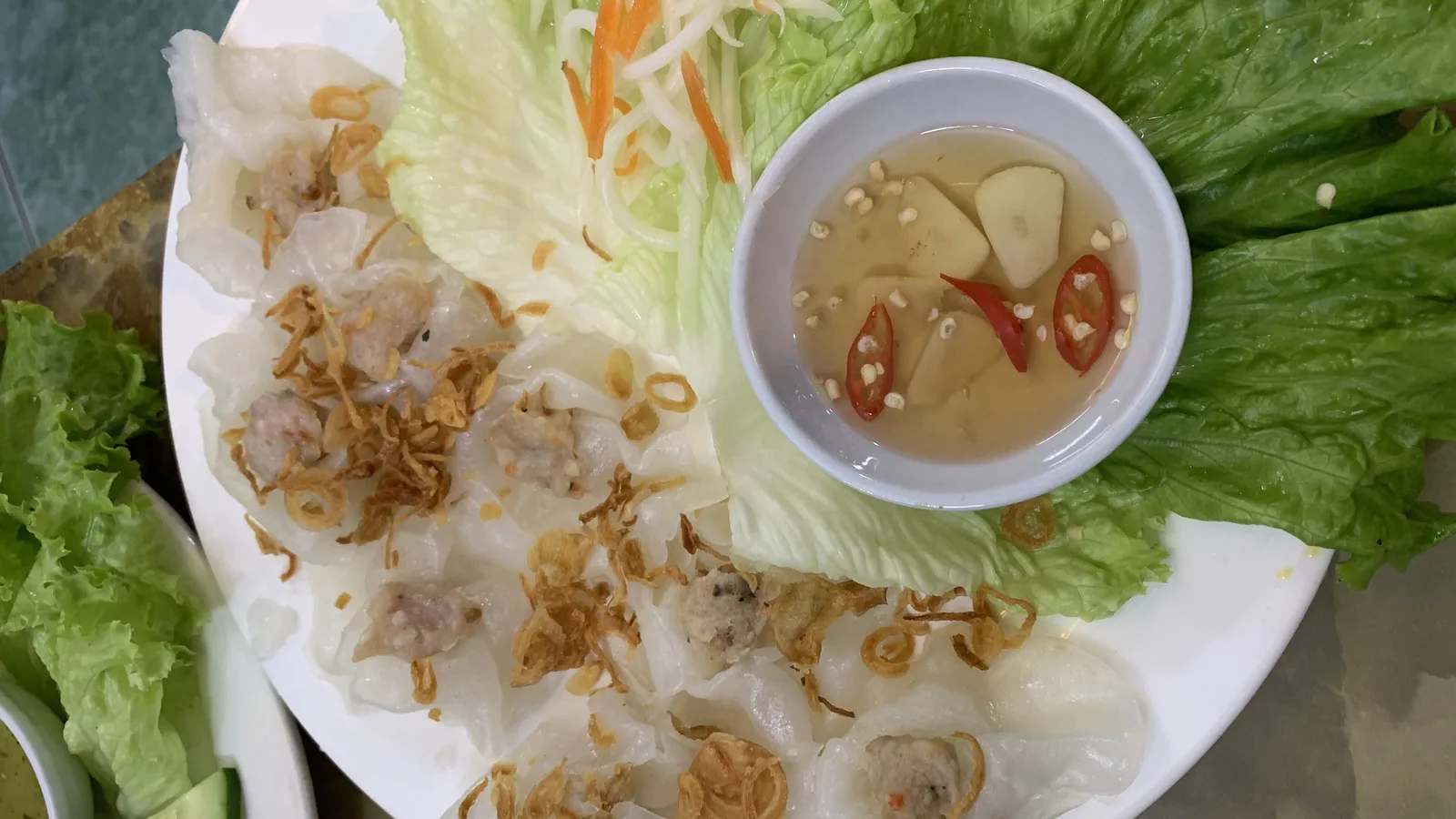
White rose dumplings, called banh bao banh vac, are steamed rice-flour dumplings whose translucent wrappers are folded to look like a flower. Wikipedia describes a filling of shrimp with mushrooms and spring onions, topped with fried shallots and served with a sweetened fish-sauce dip. It names the dish as a speciality unique to Hoi An.
Accounts differ on which family first made them, and we have not been able to verify how many kitchens make them today, so we will not tell you where to go. Because the filling is shrimp, they are an obvious thing to avoid if you have a shellfish allergy, and the dip is made with fish sauce. If you have any food allergy, say so before you order and ask the staff what is in each dish.
Com ga
Com ga is Hoi An’s version of chicken rice. Shredded chicken is mixed with onions or spring onions and served over yellow rice cooked with turmeric and chicken broth, with salad greens and herbs such as coriander and mint on the side. The national tourism board calls it a light yet hearty comfort food, and it is a gentle choice for a first evening.
Local guides mention lime, chilli, pickles and a small bowl of broth on the side, so you can season it to taste. What arrives at your table will depend on the kitchen.
One drink worth trying
Nuoc mot is a cold or hot herbal drink sold in Hoi An, most often as take-away. The tourism board describes it as a herbal tea steeped from a mix of ginger, lemongrass, cinnamon and other ingredients, named after its young creator. We will not make health claims about it; try it because it is local and pleasant.
Eating carefully over fifty
Hoi An is a good place to eat, and any traveller can get an upset stomach abroad. We are not doctors and the following is not medical advice. It summarises what the US Centers for Disease Control and Prevention says in its food and water safety advice, reviewed 6 January 2026, which is where we would start.
- Be conservative with street vendors. The CDC’s general travel advice is to avoid food from street vendors and, if you do eat it, to follow the same food-safety rules as anywhere else.
- Choose hot food, served steaming. The CDC says to keep hot food hot and avoid food that has sat at room temperature.
- Drink sealed bottled water and check that the seal is intact. The CDC says not to use ice in destinations with limited access to clean water. We cannot tell you which café’s ice is safe, so ask or skip it.
- Peel fruit yourself and avoid cut-up fruit.
- Wash your hands before eating, or use a hand sanitiser with at least 60% alcohol.
On vaccines, the CDC’s Vietnam page, last reviewed on 25 August 2026, recommends hepatitis A for unvaccinated travellers and typhoid for most travellers. That is a conversation for your own doctor, ideally some weeks before you fly. Read health and travel insurance after fifty alongside this. We sell tours, so we have an interest in you eating well; the reason to check the CDC and not us is exactly that.
Careful habits lower the odds, and they do not remove them. If you feel unwell, rest, drink safe fluids, and see a doctor if it does not improve or you are worried. Do not rely on a guide, a hotel or us to decide that for you.
Prices and paying
We are not printing dish prices. Published figures for Hoi An food contradict each other, menus change and prices differ between a market stall and a restaurant with a river view. What we can say is this: ask to see the menu or the price before the food is cooked, check what the bill adds, and keep small notes for food stalls. The note mix-up described in money in Vietnam happens most often when paying for cheap food in a hurry. For tipping, see tipping in Vietnam, and for avoiding the usual tourist traps, tourist scams in Da Nang and Hoi An.
To work eating into a day, see our three-day plan, and more guides in the Vietnam travel guide index.
Common questions
What is Hoi An famous for eating?
Four dishes in particular: cao lau noodles with roast pork, banh mi, white rose dumplings and com ga, the local chicken rice.
What is cao lau?
A Hoi An noodle dish of firm, springy rice noodles, soaked in lye water, served with roast pork, bean sprouts, greens and crisp pieces on top, in a thick sauce rather than a broth. It is rarely found outside Hoi An.
What are white rose dumplings made of?
Steamed rice-flour dumplings shaped like a flower, filled with shrimp, according to Wikipedia, and served with fried shallots and a sweetened fish-sauce dip. They are not suitable if you have a shellfish allergy.
Is street food in Hoi An safe to eat?
We cannot promise that. The US CDC advises being cautious with food from street vendors, choosing food served steaming hot, drinking sealed bottled water and washing your hands. Talk to your own doctor before you travel.
How much does a meal cost in Hoi An?
It varies widely between market stalls and restaurants, and published figures disagree, so we do not print one. Ask to see the menu or price first and carry small notes.
What is com ga?
Hoi An chicken rice: shredded chicken with onions over yellow rice cooked with turmeric and chicken broth, served with salad greens and herbs.
Planning this trip yourself?
Ask us anything about the route, the pace or the timing. It goes straight to the office in Da Nang, not to a call centre — and if we are not the right company for your trip, we will tell you that too.



Mai Tiến Tần
Founder, Vietking Travel · Licensed international tour operator No. 01-1082/2018 · Company registered in Vietnam, 2011
Everything here is written from Da Nang, after walking the route. Prices carry the date they were checked. Where we do not have a figure we can stand behind, we say so rather than guess.