
Planning
How Much Walking Is There Really on a Vietnam Trip?
This is the question we are asked most often by travellers over fifty, and the one tour brochures answer least honestly. The distance is rarely the problem. The surface and the stairs are.
This is the question we are asked most often by travellers over fifty, and the one tour brochures answer least honestly. The usual reply is a word — “moderate” — which means nothing, or a reassurance that the pace is relaxed, which is not the same thing at all.
Here is a more useful version of the answer, including the parts that do not flatter us.
Why “how far” is the wrong question
Most people who worry about this can walk several kilometres on a flat pavement at home without thinking about it. They are not unfit. They have specific limits — stairs, heat, standing still, uneven ground — and a distance figure tells them nothing about any of those.
Almost nobody is defeated by the distance. People are defeated by forty minutes of standing on stone in the sun, or by a staircase with no handrail, or by a cobbled street in the dark at the end of a long day.
The four things that actually decide the day
1. Stairs, and whether there is a handrail
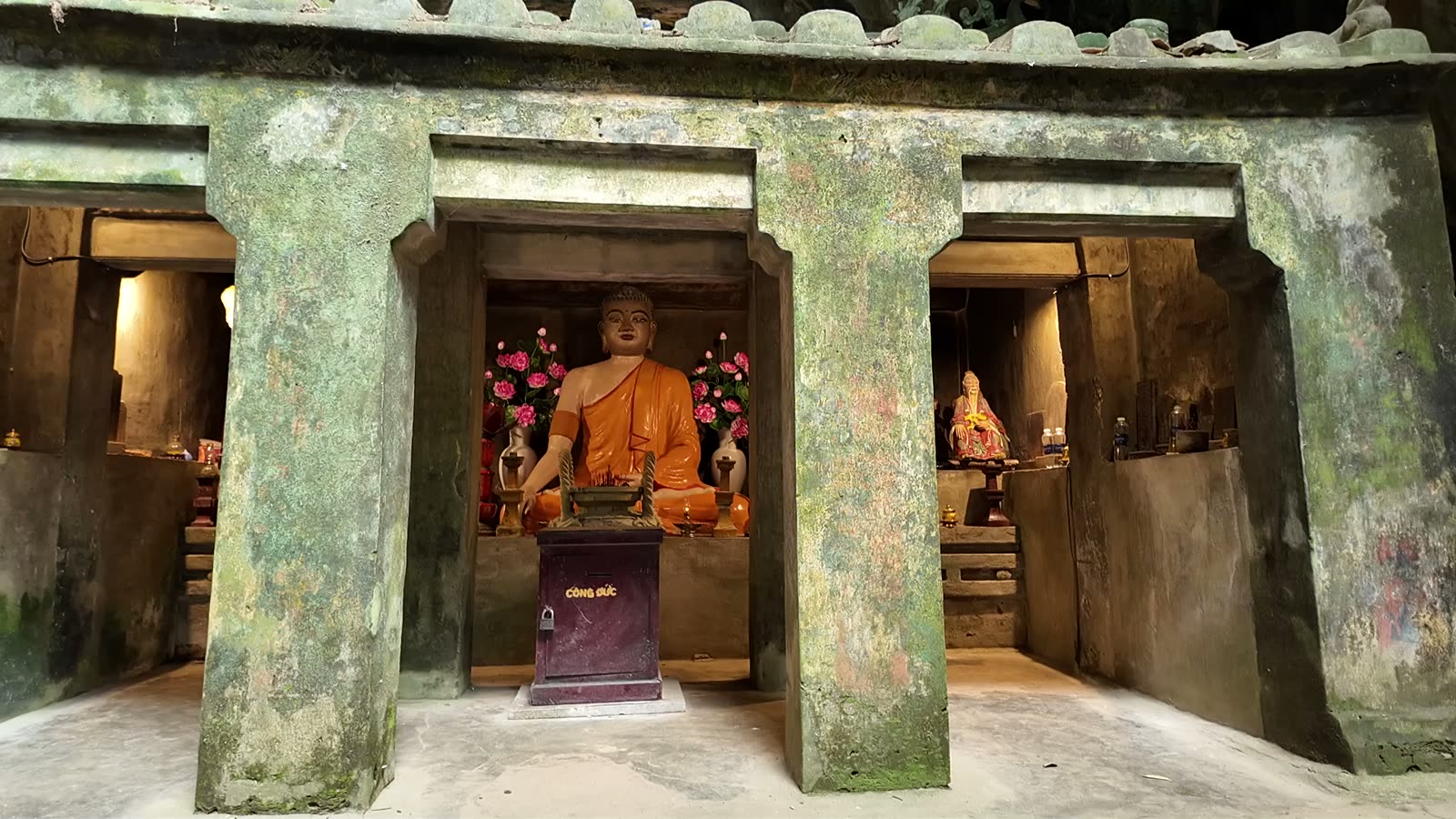
Vietnam’s older sites are built upward. Pagodas sit on hills, caves are entered by cut steps, old houses have narrow internal staircases. Many of those steps are irregular — different heights within one flight — and a handrail is the exception rather than the rule.
A flight of thirty even steps with a rail is easier than eight uneven ones without.
2. The surface
This is the one nobody mentions and the one that causes most of the trouble. Old stone that has been walked on for centuries is polished. In caves and on riverfronts it is damp much of the year. Polished wet stone is slippery in a way that dry stone simply is not.
Hoi An’s old town is uneven underfoot everywhere, and in the evening the light is low and warm and makes it harder to read the ground, not easier.
3. Heat and humidity
The same walk is a different walk at ten in the morning and at one in the afternoon. Heat does not merely make you uncomfortable; it shortens how long you can stay interested. A great many “I could not manage it” stories are really heat stories, and the fix is the hour rather than the itinerary.
4. Standing still
The most underestimated of the four. Walking for an hour is often easier than standing for twenty minutes listening to an explanation. If your back or knees dislike standing, say so early and plainly — the solution is a seat, and seats can almost always be found.
Central Vietnam, site by site
What we can describe from having walked them ourselves.
Marble Mountains, Da Nang
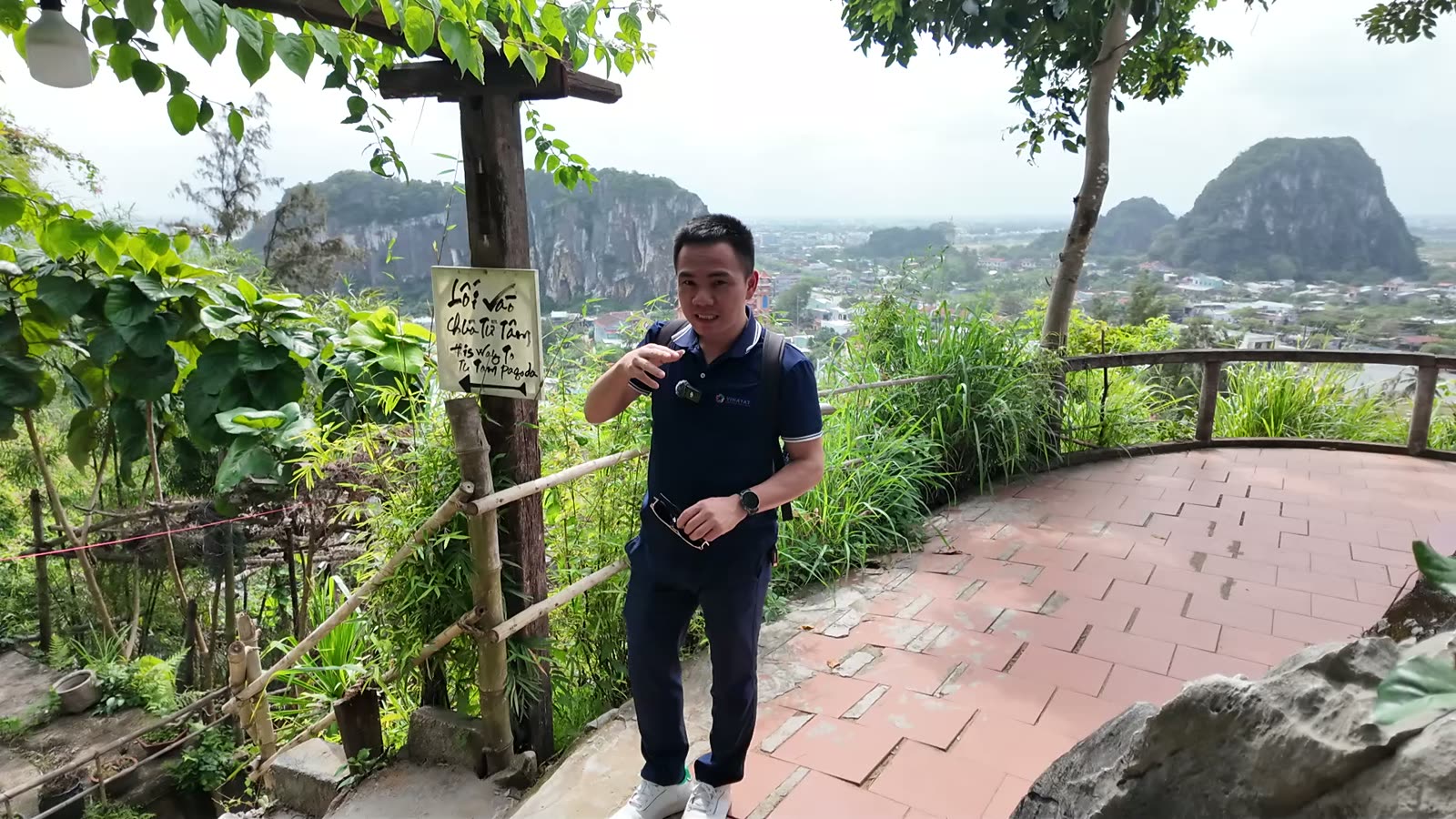
The hardest of the easy sights. A lift removes the first staircase, but the caves, the pagoda and the summit all have their own steps, and the summit climb is steep and narrow with a chain instead of a handrail. The cave floors are damp and polished.
Gentle version: lift up, the large cave and the pagoda, skip the summit, lift down. That is still the best of the place. Full detail in the Marble Mountains guide.
Hoi An Ancient Town
Flat, but uneven everywhere, and the old houses have narrow internal stairs and high thresholds. The distances are small; the surfaces are the issue. It is pedestrianised in the evening, which means a longer walk from wherever a car can reach.
Gentle version: go in the afternoon, use a cyclo for the long axis of the town, and choose a riverfront table rather than walking the whole grid. See Hoi An at night.
Bay Mau coconut forest
Very little walking. The difficulty is a single movement: stepping down into a round boat from a floating dock, with nothing solid to hold. If that is a problem, the whole activity is a problem. Honest assessment in the basket boat guide.
Ba Na Hills
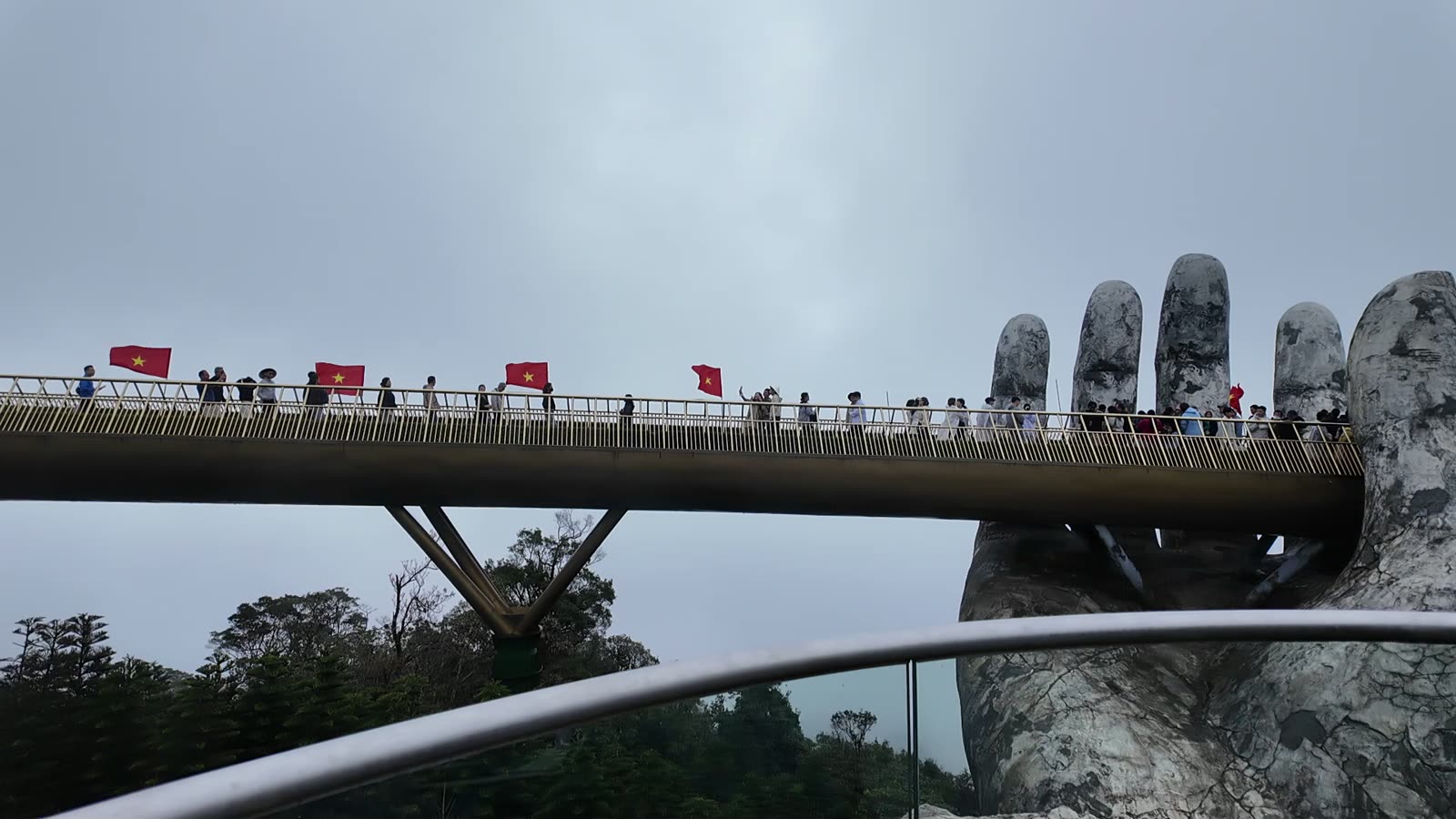
More walking than people expect, spread over a hilltop, with steps and slopes between areas. There is a lot of it indoors, which helps in heat and in rain. The Golden Bridge itself is a flat walkway. See Ba Na Hills in the rain.
Da Nang city
Flat, modern pavements, a long riverside promenade, and the easiest walking in the region. If one day of a trip needs to be a recovery day, this is where to put it.
What we cannot tell you yet
We are not going to publish step counts for these sites, because we have not counted them.
Other sites do publish such numbers. Some of them are copied from each other and none of them cite a measurement. A figure that looks precise and has no source behind it is worse than no figure, because you will plan around it.
We are measuring the main central Vietnam sites ourselves — step counts, distance between stopping points, how long each section takes at an unhurried pace. When we have walked each one with a counter, we will publish the figures with the date they were measured, as we do with prices. Until then, the descriptions above are what we can honestly give you.
Eight questions to ask any operator
Including us. If an answer is vague, that is information.
- How many stairs are there at the sites on this itinerary, and do they have handrails?
- What is the ground like underfoot — paved, stone, sand, uneven?
- How long will I be standing still at each stop?
- What time of day is each outdoor site visited?
- How far from where the vehicle stops to where we actually go?
- If I want to sit a section out, where exactly would I wait, and for how long?
- Is there a gentler alternative for this site, and can I decide on the day rather than at booking?
- Has the person answering these questions walked it themselves?
How to design a day that works
- One demanding thing per day, in the morning. Not two, and not after lunch.
- Put the hard site first, while it is cool and your legs are fresh.
- Protect the afternoon. An empty afternoon is not a wasted afternoon; it is what makes the evening possible.
- Decide the gentle option on the morning, not at booking. You do not know in March how your knee will be in November.
- Shoes with grip, and never new ones.
- Say the limit out loud at the start. Everything is easier to arrange before the day begins than halfway up a staircase.
Our three-day plan for Da Nang and Hoi An is built on exactly these rules, with a gentle version written into each day. If you are at an earlier stage than that, start here.
Common questions
How much walking is involved in a Vietnam tour?
Less distance than most people fear, and more stairs and uneven stone than brochures suggest. The deciding factors are stairs without handrails, polished or damp stone, heat in the middle of the day, and time spent standing still rather than walking.
Is Vietnam suitable for travellers over 60?
Yes, with the day built around the four factors above: one demanding site per day, scheduled in the morning, with a gentle alternative that can be chosen on the day rather than at booking. Da Nang in particular has flat, modern pavements and an easy riverside promenade.
Are there wheelchair-accessible sites in central Vietnam?
Da Nang’s riverside and newer public areas are broadly manageable. The historic sites generally are not: the Marble Mountains have no step-free route through the hill, and Hoi An’s old town is uneven throughout with high thresholds into the old houses. Ask about each site specifically rather than about the trip as a whole.
How many steps are there at the Marble Mountains?
We have not counted them and we will not print a number we cannot stand behind. What matters more is that the lift removes only the first staircase, and that the caves, the pagoda and the summit each have their own flights, the summit being the steepest.
What shoes should I bring to Vietnam?
Closed shoes with a grip pattern, already worn in. Cave floors are damp, old stone is polished, and smooth soles are the most common cause of slips at the historic sites.
Can I skip part of a tour if I need to?
You should be able to, and the question to ask before booking is where exactly you would wait and for how long. If an operator cannot answer that precisely, they have not thought about it.
Planning this trip yourself?
Ask us anything about the route, the pace or the timing. It goes straight to the office in Da Nang, not to a call centre — and if we are not the right company for your trip, we will tell you that too.


Mai Tiến Tần
Founder, Vietking Travel · Licensed international tour operator No. 01-1082/2018 · Company registered in Vietnam, 2011
Everything here is written from Da Nang, after walking the route. Prices carry the date they were checked. Where we do not have a figure we can stand behind, we say so rather than guess.